
Building AI Skills for the Future of Patient Care
What does it take to move from a clinical problem to a practical AI solution?
That was the focus of a recent generative AI workshop hosted by the University of Utah's Department of Biomedical Informatics (DBMI), where frontline clinicians gained hands-on experience designing, building,
and evaluating AI tools for healthcare. The workshop created a collaborative environment
where participants could explore the potential of generative AI while learning how
to apply it responsibly within real-world clinical settings.
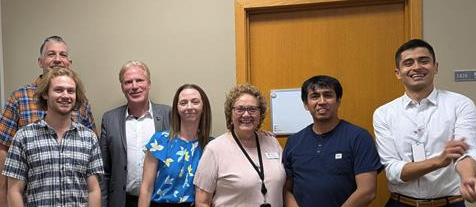
The workshop was led by a multidisciplinary team from DBMI and University of Utah Health, including Yves Lussier, Carolyn Scheese, JT Menchaca, Ken Kawamoto, David El-Hata, Christian Balbin, and Peter Taber. By bringing together expertise in clinical care, informatics, education, and AI,
the team helped participants move beyond theory and into practical application.
The program combined foundational instruction with guided, hands-on development. During
the first day, participants explored the fundamentals of modern AI, identified a focused
clinical challenge, and began building the components of their own AI-powered tools.
The second day shifted into an applied clinical AI lab, where participants developed
prototypes, tested and refined their approaches, and shared their work with peers
and instructors for feedback.
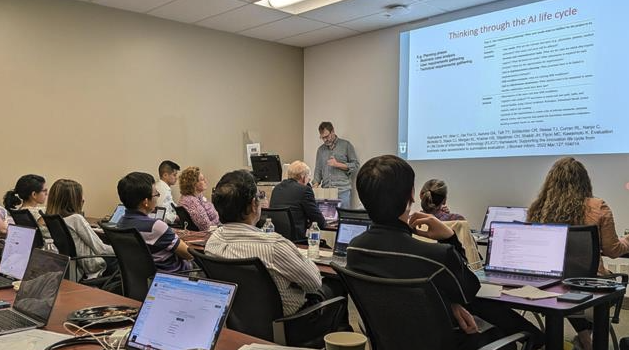
A key part of the workshop was hands-on training with AI Workbench, an AI development
environment integrated with Epic. This gave participants the opportunity to explore
AI development within the context of the clinical environment and better understand
how future tools could fit into existing healthcare workflows and systems.
Importantly, the workshop was designed to take participants beyond simply creating
a working prototype. As clinicians explored potential solutions, they were encouraged
to consider the questions that ultimately determine whether an AI application belongs
in healthcare:
- Is it useful?
- Is it safe?
- How should it be evaluated?
- Does it fit within clinical workflows?
- Does it provide meaningful value to patients and clinicians?
Those questions reflect a broader challenge facing healthcare today. As generative
AI tools become increasingly accessible, building a prototype is becoming easier than
ever. Determining whether that prototype is sufficiently useful, safe, validated,
and appropriately integrated into clinical care remains considerably more difficult.
By bringing together clinicians, informaticians, faculty, and students in a collaborative
learning environment, the workshop demonstrated how DBMI can help healthcare professionals
move beyond experimenting with generative AI toward rigorous, clinically grounded,
and responsible development and implementation. Rather than focusing solely on what
AI can do, participants examined how AI tools should be designed, evaluated, and deployed
to support better healthcare outcomes.
The workshop also highlights the University of Utah's commitment to preparing healthcare
professionals for an AI-enabled future. By combining technical training with clinical
expertise and responsible AI principles, DBMI is helping build the knowledge and skills
needed to thoughtfully evaluate and implement emerging technologies.
Building on the success of this initiative, organizers plan to offer these workshops
on a regular basis, creating ongoing opportunities for clinicians to gain hands-on
experience with generative AI and learn how to translate clinical challenges into
well-designed, evidence-informed solutions.
From developing prototypes to asking critical questions about safety, value, and effectiveness,
participants left with more than technical skills. They gained a framework for thinking
about how AI can be responsibly integrated into healthcare, ensuring that innovation
remains grounded in the needs of patients, clinicians, and the healthcare system as
a whole.
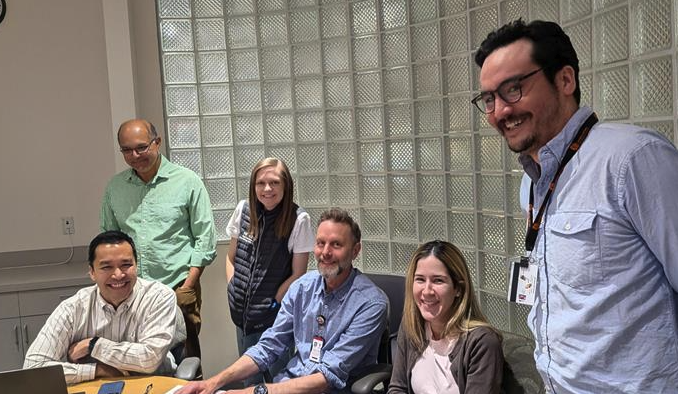
Workshop participants collaborated on AI development projects, explored clinical use
cases, and gained hands-on experience building healthcare-focused solutions.