
AI News
-

Building Better Student Experiences with AI-Driven Innovation
AI is helping the UIT-CRM team streamline the Graduate School Success project by creating diverse, detailed personas quickly and securely, enabling faster development and more intuitive solutions for campus staff.
-

How AI is Revolutionizing Practical Application Design in Naval Science Education
AI is reshaping naval science education by making training scenarios more dynamic, realistic, and timely. At the University of Utah, innovative use of AI tools is reducing development time and enhancing learning experiences—bridging the gap between theory and practice.
-

One-U RAI marks three years of milestones, from research to Redtail
At its third annual symposium, One-U RAI celebrated three years of progress and the launch of Redtail, a statewide resource for research, education and pro-human AI.
-

Students build AI-powered solutions for education at Minds and Machines Hackathon
Over 48 hours, the One-U Responsible AI Initiative’s event gathered 102 participants across 26 teams to leverage data science, machine learning and AI to tackle real-world issues in the classroom.
-

Meet the 2026 Innovation Awards Winners
This year’s Innovation Award recipients are redefining what’s possible for some of society’s biggest challenges.
-

Senate Summary | Sept. 28, 2026
If you missed the Sept. 28 Academic Senate meeting or need a refresher, keep reading for the highlights from the meeting. Meetings are open to the public and held on Zoom.
-

Exploring the ethics of artificial intelligence
Co-developed in the Department of Philosophy and the Kahlert School of Computing, a new class addresses today’s AI issues.
-

AI at the U Forum: September 16, 2026
AI at the U Forum Highlights Responsible AI Use Across Research, Teaching, and Operation
-
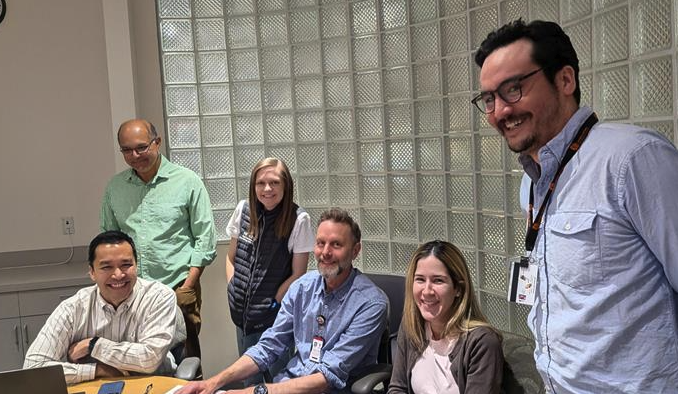
Building AI Skills for the Future of Patient Care
As AI becomes increasingly integrated into healthcare, clinicians need more than technical skills. A recent DBMI workshop gave participants hands-on experience developing AI-powered healthcare solutions while learning how to responsibly evaluate, implement, and apply these emerging technologies in clinical practice.
-

From lab to living room: Revolutionary Utah bionic arm enters first home trial
Meet Avi Davidson, a left-hand amputee using the neuroprosthetic "Luke arm" that is controlled by thoughts and provides sense of touch.
-

Mapping AI Exposure Across America's Workforce
University of Utah student Teddy Wright is helping map AI's impact on the workforce through research that connects real-world AI capabilities to thousands of occupational tasks, informing policy, education, and workforce planning.
-

ChatGPT EDU Update: Clarification on Recent Cost Change Communications
A message from university leadership clarifying a recent ChatGPT EDU communication and providing an update on efforts to identify the best path forward for the university community.
-

Using machine learning to see how living brains learn
New study shows that as neural networks learn, they adopt patterns of activity similar to real-life neuron firing patterns in a part of the brain that’s important for learning.
-

From Clinical Research Pioneer to AI Explorer
Professor Emeritus J. Michael Dean spent decades advancing pediatric clinical research through the University of Utah's Data Coordinating Center. Now in retirement, he's exploring how AI can help accelerate clinical research, streamline workflows, and support lifelong learning through hands-on experimentation and innovation.
-

U researchers join NSF center that studies how robots and people learn to work together
A collaboration with five other universities will place assistive robots in everyday human environments.
-

Senate Summary | Aug. 24, 2026
If you missed the Aug. 24 Academic Senate meeting or need a refresher, keep reading for the highlights from the meeting. Meetings are open to the public and held on Zoom.
-

Empowering Teachers to Support Multilingual Learners with AI
Through workshops across Utah, Assistant Professor Tuba Yilmaz is helping teachers use AI thoughtfully and responsibly to support multilingual learners. By pairing AI tools with proven ESL instructional practices, educators can create more personalized learning experiences while spending more time engaging directly with students.
-

AI and the Future of Design Education
To kick off the fall semester, the College of Architecture and Planning convened faculty, staff, and researchers for a forward-looking conversation on AI and the future of design education. The discussion examined emerging opportunities for teaching and research, the importance of responsible AI, and how diverse disciplinary perspectives can help shape the future of these technologies.
-

A new chapter in healthy aging
Finalists compete for the XPRIZE Healthspan $101 million prize. The University of Utah-based Utah Data Coordinating Center will determine whether the science delivers results.
-
AI at the U Forum: July 22, 2026
At the July AI at the U Forum, participants explored new AI programs, upcoming events, AI resources, the university's new Bachelor of Science in Artificial Intelligence degree, and emerging opportunities powered by Redtail, Utah's AI supercomputer. The forum highlighted the growing AI ecosystem at the University of Utah and ways for faculty, staff, students, and community members to get involved.
-

The Crimson AI Challenge
This fall, the AI Leadership Team launches the Crimson AI Challenge, inviting the university community to share impactful AI use cases across research, teaching and learning, and administrative operations. Selected participants will be recognized.
-
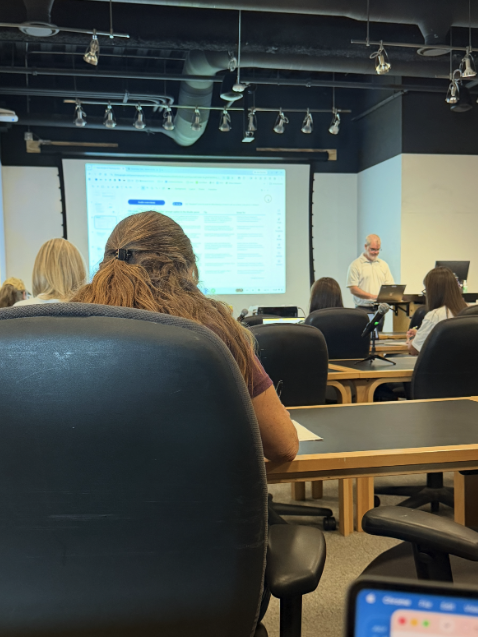
Educators Across Utah Explore Practical AI Applications in Teaching and Learning
Utah educators recently came together at the University of Utah for hands-on professional development focused on artificial intelligence in teaching and learning. Through sessions led by AI education experts Matt Winters and Chris McCaffrey, participants explored AI literacy, responsible AI practices, and practical strategies for supporting student success. The event underscored the value of equipping educators with the knowledge and confidence needed to navigate an increasingly AI-enabled future. Read the full story.
-

Preparing Utah's Workforce for an AI-Enabled Future
Dr. Quentin T. Baldwin recently joined community leaders, educators, and workforce advocates as a panelist at the State of Black Utah Town Hall to discuss educational pathways, workforce readiness, and economic opportunity in an AI-enabled future. Drawing on his research at the University of Utah, Dr. Baldwin highlighted the importance of developing both AI-related skills and uniquely human capabilities such as critical thinking, ethical reasoning, collaboration, adaptability, and lifelong learning. The conversation underscored a key message: preparing for the future of AI requires not only technological innovation, but also investments in people, education, and responsible leadership.
-

Utah’s Redtail AI supercomputer ranks among world’s fastest, greenest
The University of Utah’s new AI factory will expand access to advanced computing for researchers, students and industry across Utah
-

Leveraging AI to Illuminate Scientific "Dark Data"
Much of the world's scientific data remains hidden from researchers because it is poorly indexed, inconsistently cited, or trapped within disciplinary silos. Learn how University of Utah researchers, led by Chief AI Officer Manish Parashar, are leveraging AI and the National Data Platform to bring scientific "dark data" into the light.
-

Celebrating the Build with AI Codex Hackathon Winners
The Build with AI Codex Hackathon brought together an impressive group of innovators who showcased creative, impactful applications of AI across research, healthcare, security, accessibility, and productivity. We were inspired by the technical depth and real-world potential demonstrated in each project, and we're proud to recognize our winners and all participants for their outstanding work.
-

National Recognition for a University of Utah AI Initiative Built on Trust, Conversation, and Student Voice
A student-led conversation about artificial intelligence at the University of Utah is receiving national attention. Featured in the 2026 EDUCAUSE Horizon Report, the Student-Led AI Symposium demonstrates how trust, collaboration, and student voice can strengthen AI literacy and engagement across campus. Discover how this growing initiative is helping build a more connected and informed AI community.
-
AI at the U Forum: Building Momentum Across Campus
The June 3 AI at the U Forum highlighted practical, approved tools and hands‑on learning opportunities to evolving guidance on responsible use in teaching, research, and operations. Featuring community events, new tools, and ways to get involved.
-

How AI is helping more patients recover at home
Heal at Home began as an effort to help patients recover safely and comfortably in their own homes.
-
Fall 2026 AI Foundations Series Launches This August
Digital Learning Technologies is excited to introduce the Fall 2026 AI Foundations Series, a semester-long professional learning opportunity designed for students, staff, and faculty who want to build practical skills with today's most impactful AI tools.
-

AI tools and data privacy: A University of Utah primer
What tools can you use without violating university policy, and how can you tell the difference between each tool?
-

Announcement: AI in Education Training for English, Math, & Science Educators
Join USBE and Google for Education this summer for an AI in Education training series focused on English, Math, and Science. This 8-week program includes virtual learning and a two-day, in-person session at the University of Utah (July 13–14) to develop and share emerging best practices.
-

U to build out Utah Health AI Vault (UHAIV) with state support
Utah leaders' commitment to an advanced computing infrastructure will expand the university’s research capacity and establish a foundation for a statewide AI ecosystem.
-
University of Utah Expands AI Toolkit with Google Gemini and NotebookLM
The University of Utah continues to expand its AI ecosystem with the introduction of Google Gemini and NotebookLM. Designed to support productivity, research, and learning, these tools reflect the university’s commitment to providing innovative capabilities within a secure and responsible framework.
-
AI at the U Forum: Building Momentum Across Campus
The April 8 AI at the U Forum highlighted how artificial intelligence is gaining momentum across campus—from practical, approved tools and hands‑on learning opportunities to evolving guidance on responsible use in teaching, research, and operations. Featuring updates from university leadership and the growing AI community, the forum underscored a shared commitment to making AI more accessible, intentional, and integrated into everyday work and learning.
-

Driving Innovation in Environmental and Spatial Data Science
The School of Environment, Society & Sustainability (ESS) is expanding its leadership in AI-driven environmental and spatial data science through new faculty hires, academic programs, and research investments. With expertise spanning remote sensing, machine learning, and geospatial analytics, ESS supports cutting-edge research on climate impacts, natural hazards, and sustainability challenges. New undergraduate and master’s programs in Spatial Data Science are preparing students with in-demand AI and geospatial skills, reinforcing ESS’s long-term vision for innovation in research and education.
-

State-backed AI supercomputer set to expand research capacity across Utah this summer
Utah lawmakers invested $15 million in the university's new artificial intelligence supercomputing system.
-

Tapping AI for precision-guided cancer therapies
New "lab-on-a-chip" platform may enable same-day treatment decision for pediatric cancer patients.
-
Turn Ideas into Impact: Join the Build with AI Hackathon
Join our upcoming AI Hackathon, a fast‑paced virtual event where participants from any discipline use AI tools to tackle real‑world problems. In just a few hours, you’ll collaborate, build, and explore how AI can drive practical impact.
-

Structuring the Unstructured: Advancing Health Data with AI
Fatemeh Shah Mohammadi’s teams are using large language models to turn messy, unstructured health text into transparent, structured data that clinicians and researchers can trust. Their work enables earlier clinical risk detection and scalable, standardized metadata extraction, improving interoperability, reproducibility, and real‑world health insights.
-
Citing AI Use in Research and Scholarly Work
Guidance for researchers on responsibly acknowledging AI assistance in manuscripts and presentations, with examples from major academic publishers and a reminder to always check evolving agency and journal requirements.
-

AI at the U: February 11 Forum Recap
The Office of Artificial Intelligence hosted the AI at the U Forum, offering campus wide updates on teaching, research, policy, and infrastructure. This summary highlights new training opportunities, responsible‑use reminders, and the growing AI ecosystem at the University of Utah.
-

U Offers Advanced AI Features Through ChatGPT Edu, and Training to Make the Most of the Tool
ChatGPT Edu is now available to the University of Utah community, including all students, providing access to advanced AI capabilities in a secure, university-managed environment designed to support teaching, learning, research and administrative work. The U is also committed to equipping you with the skills to make the most of the tool—read about training opportunities.
-

Senate Summary | Feb. 2, 2026
Academic Senate meetings are open to the public and are held on Zoom.
-

AI-Fluent Education at the Eccles School of Business
The David Eccles School of Business is implementing a vision for AI‑fluent education that integrates generative AI into core learning while keeping critical thinking, ethics, and decision‑making at the center. The initiative supports both students and faculty through training, shared resources, and career-aligned guidance to prepare graduates for an AI‑enabled workplace.
-

Utah AI Summit 2025: Dr. Penny Atkins Highlights Utah's Strength in Responsible AI
At the 2025 Utah AI Summit, Dr. Penny Atkins highlighted Utah’s growing leadership in responsible AI through strong collaboration between universities, state government, and industry. She emphasized the University of Utah’s research momentum and the One‑U Responsible AI Initiative as key drivers for embedding ethical AI practices into research and education. The panel agreed that Utah’s coordinated, cross‑sector approach positions the state to advance innovative AI that aligns with public trust and societal needs.
-

Individualized Math Learning Through Post-Exam Reflection
Post-exam reflection can turn math tests into powerful learning tools. Associate Professor Rebecca Noonan-Heale is using AI to make this process more engaging by having students analyze mistakes and discuss missed problems with a chatbot. This approach provides personalized feedback at scale, supports students who can’t attend office hours, and encourages deeper understanding of concepts. Early results suggest improved learning, and the model is being shared with other instructors as a promising teaching strategy.
-

Streamlining Advising with Zoom AI Companion
Academic advising is essential for student success, but documentation can be time-consuming. To address this, leaders have introduced formal standards for using Zoom’s AI Companion to summarize advising sessions. These guidelines ensure accurate, FERPA-compliant records while reducing administrative burden, allowing advisors to focus on meaningful student engagement. By streamlining workflows, this initiative strengthens advising continuity and supports proactive academic planning.
-

Powering Hope: The Rise of AI in Ophthalmology
Adam Dubis is driving advances for artificial intelligence in eye care and vision research.
-

AI Innovation in Mental Health Care
Dr. Warren Pettine is advancing human-centered AI in mental health care. His work demonstrates how AI can strengthen clinical decision‑making, improve workflows, and support more effective and equitable mental health care.
-
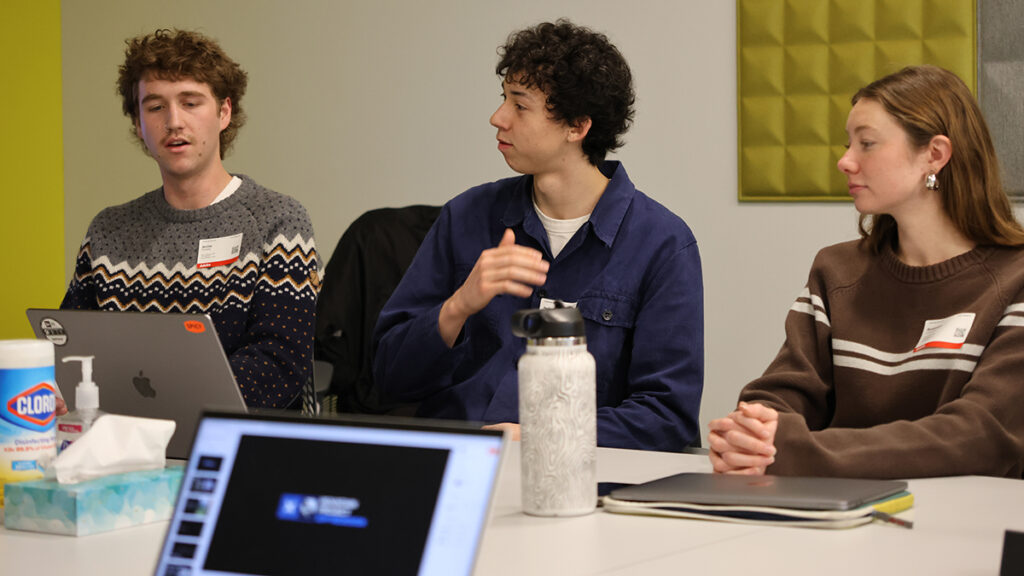
Students redesign popular apps, Adobe gives feedback
Multi-Disciplinary Design juniors present their final projects at Adobe’s headquarters in Lehi, receiving career-shaping feedback from a team of professional designers.
-

AI at the U Forum: December 10, 2025
The December 10 AI Forum brought together university leaders and experts to share updates, resources, and opportunities shaping the future of artificial intelligence across campus. The session covered topics ranging from AI in teaching and research to security, responsible use, and new tools like ChatGPT Edu, while highlighting collaboration and Utah’s growing AI ecosystem.
-

How AI is Elevating Learning in Nursing Education
AI is helping elevate nursing education by streamlining academic support and improving student learning outcomes. Assistant Professor Chris Macintosh uses AI tools to enhance writing feedback, strengthen evidence-based practice skills, simplify statistical concepts, and support job-search preparation. The approach reduces faculty workload while giving students more organized, accessible guidance. The result is clearer writing, stronger statistical confidence, and better preparation for professional nursing practice—showing how AI can enhance, not replace, the human connection in teaching and learning.
-

GARDE-Chat: AI-Powered Platform for Digital Health Interventions
GARDE-Chat is an AI-powered, no-code platform that enables researchers to build chatbot-based digital health interventions at scale. Developed by Professors Guilherme Del Fiol and Ken Kawamoto, the tool supports rule-based and LLM-driven chatbots and has already powered more than 15 projects—including large trials reaching up to 100,000 patients. By improving access to evidence-based services and helping secure over $35 million in federal funding, GARDE-Chat demonstrates how AI can make healthcare interventions more scalable, effective, and widely accessible.
-

Leveraging AI and Virtual Reality for Social Work Training: An Innovative Approach
Chad McDonald and Matt Davis, Research Associate Professors at the University of Utah, have developed Virtual Motivational Interviewing (VMI), an AI- and VR-powered training tool within the Virtual Skills & Workforce Trainer (VSWT) platform. VMI provides social workers with repeated, realistic practice using AI-generated scenarios and a chatbot that simulates clients, offers feedback, and supports skill development in motivational interviewing. Modeled after Duolingo’s scaffolded learning approach, the platform delivers thousands of varied practice interactions efficiently. Early research shows the tool is well-received and performs as effectively as traditional training methods.
-

Preparing Communicators for the AI Era
A new course, AI Prompting for Strategic Communication (COMM 3580), prepares emerging communicators to work confidently and responsibly with artificial intelligence. Taught by Professor Andy J. King, the class gives students hands-on experience with AI tools that streamline workflows, enhance creativity, and support real-world communication tasks. Alongside practical skills, students also explore ethical considerations and the limits of AI in professional settings.
-

Using AI to Predict Changes in Student Employee Staffing Needs
This story highlights how the Marriott Library used AI to improve student employee staffing in interlibrary loan services. By analyzing historical request data and generating predictive heatmaps, Acquisitions Supervisor Annelise Nicholes Xiao aligned student schedules with actual demand—reducing idle time, improving service quality, and creating a more stable work environment. The project shows how predictive AI can streamline operations and elevate the student and patron experience, with further applications already underway.
-

AI and Bionics: Restoring Movement and Sensation
At the University of Utah’s Utah NeuroRobotics Lab, artificial intelligence is driving breakthrough research in bionic technology. Led by Jacob A. George, the team develops AI-powered prosthetic and assistive devices that restore movement and sensation for individuals with neuromuscular impairments. Their work blends engineering, medicine, and machine learning to create intuitive, life-changing technologies—many of which have already produced compelling patient outcomes and inspired new startup ventures. Through deep interdisciplinary collaboration, the lab is shaping the future of bionics and redefining what’s possible in assistive healthcare.
-

AI Bridges Systems and Saves Time
At University Connected Learning, artificial intelligence is helping streamline communication between systems that traditionally don’t work well together. Program Coordinator Taber Tang used AI to automate the once time-intensive process of creating Outlook events for classes—reducing the workload from two to three full days to just three hours. This efficiency not only saves significant staff time but also minimizes errors and allows the team to focus on more meaningful work.
-

AI and Computer Vision: Transforming Cancer Care Through Collaborative Research
A multidisciplinary team at the University of Utah is using artificial intelligence and computer vision to develop advanced imaging biomarkers that enhance cancer diagnosis, prognosis, and treatment planning. Led by Beatrice Knudsen, one key research direction focuses on creating computational tissue biomarkers, while the broader team integrates histopathology, radiology, and clinical data into multi-modal algorithms. Supported by major federal grants and cross-department collaboration, this work is advancing precision cancer care and generating impactful publications and training opportunities.
-

AI Accelerates Public Health Research and Response
University of Utah Department of Internal Medicine Research Associate Professor George G. Vega Yon and his software development team use agentic AI as a human-guided co-developer to accelerate CDC-funded public health projects. AI assists with coding, testing, and rapid prototyping while researchers remain fully in the loop, enabling faster responses to real-world needs such as measles outbreak modeling.
-

AI Enhances Visual Storytelling at the College of Law
The University of Utah College of Law is using AI to enhance its online visual storytelling. Communications Manager Lindsay Wilcox uses Photoshop’s Generative Expand tool to intelligently extend student and faculty photos so they fit website banner dimensions without distortion. This AI-assisted process streamlines content creation, improves the look and consistency of profile pages, and helps the college present a more polished, welcoming online presence. Contributors include Lindsay Wilcox, Henry Randolph, and Jonelle White.
-

AI Elevates Audio Quality for Social Work Marketing
At the University of Utah College of Social Work, AI-powered Adobe tools are being used to significantly improve the quality and efficiency of audio editing for marketing materials. Jennifer Nozawa, Senior Manager of Marketing & Communications, uses these tools to quickly enhance clarity and consistency in recordings, reducing manual effort and producing professional-grade sound. With IT approval ensuring proper use, this initiative showcases how AI can streamline communications workflows and elevate the impact of marketing content in higher education.
-

Teaching Responsible Leadership in an AI-Enabled World
Artificial intelligence is helping reshape how responsible leadership is taught at the University of Utah. Dr. Quentin T. Baldwin integrates AI tools to enhance personalized learning, accelerate research, and support more meaningful student engagement. From adaptive U-Bots that connect lessons to current events, to AI-assisted feedback and critical thinking exercises, these tools allow him to meet students where they are—promoting both equity and academic excellence. Rather than replacing the human element, AI serves as a partner that streamlines preparation, enriches discussion, and frees time for deeper mentorship.
-
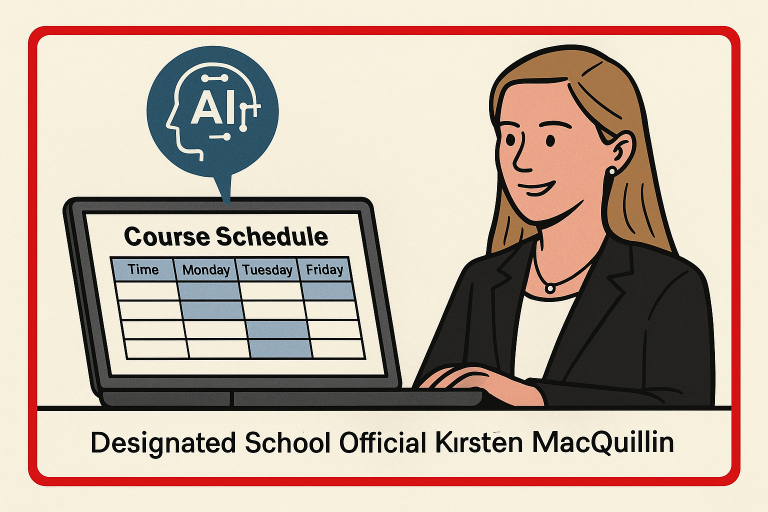
Designing a Course Schedule to Fit Standard Time Blocks
At the University of Utah’s English Language Institute, AI helped streamline the complex task of creating a compliant course schedule that fits the university’s standard time blocks. Designated School Official Kirsten MacQuillin used iterative AI prompts to generate and refine multiple schedule options, ensuring accurate instructional hours and better alignment with campus systems. The result is a more efficient, compliant schedule that simplifies coordination and demonstrates how AI can enhance—not replace—administrative decision-making.
-

AI Empowers Teachers and Students in Multilingual Education
AI is transforming multilingual education at the University of Utah, where faculty and graduate students are using innovative tools to create more inclusive and culturally responsive classrooms. Through new teacher-training courses and collaborative projects with bilingual students, Assistant Professor Tuba Yilmaz and her team demonstrate how AI can empower educators to support learners from diverse language backgrounds—without needing to speak every language themselves. Their work shows how technology can strengthen cultural understanding, build social connections, and promote educational equity across classrooms and communities.
-

Smarter Learning with AI: A Student's Guide to Doing It Right
A student-led approach is redefining how AI can support learning in higher education. Kefa Akuki, a political science major at the University of Utah, teaches peers to use AI as a partner rather than a shortcut—starting with their own research and outlines, then using AI for tasks like formatting, organizing citations, and refining structure. The approach helps students stay engaged, avoid plagiarism, and focus on understanding their coursework. With more confidence and stronger study habits, students produce clearer, more thoughtful assignments. Used intentionally, AI becomes a tool that enhances learning while supporting academic integrity.
-

Utah as a national model for smart urban growth
Guang Tian is pioneering research that blends advanced technology with urban design for healthier, better connected and more sustainable communities.
-

Will AI Replace the English Teacher? Rethinking Roles, Relationships, and Responsibility
As AI becomes more integrated into classrooms worldwide, University of Utah educators Randall Davis and Rus Wilson are helping reframe the conversation. At the TESOL Ecuador Conference, they shared how AI is transforming—not replacing—the essential human work of teaching, and what skills educators will need moving forward.
-

Prompt Pattern Engineering for Test Question Mapping Using AI
Exploring how AI-powered prompt engineering can streamline curriculum mapping and assessment alignment. This study by faculty in the College of Pharmacy demonstrates how ChatGPT can reduce review time, improve consistency, and support accreditation efforts while maintaining faculty oversight.
-

Examining the AI Scholarly Research Writing Landscape
Brandon Patterson’s project explores how AI-powered tools can support scholarly writing and research while addressing critical limitations in transparency and reproducibility. The study highlights top-performing tools, their role in academic workflows, and the importance of AI literacy for ethical integration.
-

Harnessing AI to Streamline Operations and Strengthen Campus Collaboration
At the University of Utah, we are embracing artificial intelligence not as a distant future, but as a practical, everyday partner in improving how we work. Across campus, teams are finding ways to use AI to reduce administrative overhead, strengthen decision-making, and create more connected, responsive systems.
-

How AI Is Transforming Student Success at Our University: A Vision
Discover how the University of Utah is using artificial intelligence to help students make more confident academic and career decisions. Associate Professor Jim Agutter introduces UGuide, an AI-powered advising tool that personalizes major exploration, connects students with mentors, and supports their path to graduation.
-
Understanding the National Data Platform: A New Era in Collaborative Science
Jess Tate of the SCI Institute shares about the National Data Platform (NDP), an NSF-funded collaboration designed to transform how researchers access, share, and analyze data. By connecting data sources, tools, and compute resources in a federated ecosystem, NDP makes data more findable, accessible, interoperable, and reproducible (FAIR)—advancing collaborative, scalable, and trustworthy science.
-
AI at the U Forum, October 15, 2025
The October 15 AI Forum featured updates from University of Utah leaders on AI tools—including the impending campus-wide rollout of ChatGPT Edu—as well as legal considerations, procurement processes, events, and training and curriculum development.
-

Using Meeting Transcription and Summarization Tools? Be Sure to Choose Approved Software
AI-powered transcription and summarization tools are increasingly used to capture meeting notes and recordings. While convenient, they can introduce significant risks related to data privacy, compliance, and institutional liability. This guidance outlines the university’s concerns with using unapproved tools (e.g., Otter.ai and Fireflies.ai) and the advantages of using approved tools such as Microsoft Teams Premium and Zoom AI Companion.
-

NIH Limits AI Use in Grant Proposals
The National Institutes of Health (NIH) has issued a notice to limit the use of artificial intelligence (AI) in proposal writing. The policy is not an outright restriction on the use of AI tools for limited aspects of application preparation; however, applicants should proceed with caution when using AI tools to develop ideas and/or draft applications
-
University Shares Guidelines for AI in Research and Teaching
The University of Utah AI Office is sharing guidelines to clarify how existing university rules apply to the use of artificial intelligence in research and teaching. All are invited to learn more in a virtual forum at noon on August 5, 2025.
-
Forum on AI Use at the U
On May 28, University of Utah officials hosted a virtual forum to discuss best practices for the use of artificial intelligence in an academic setting. The forum covered AI guidelines, responsible use of AI in research and teaching activities, and AI platforms available for use across the institution.


