
Discover AI in Action at The U
Across the University of Utah, faculty, staff, and students are harnessing the power of artificial intelligence to transform education, streamline operations, and accelerate research. From innovative teaching strategies and curriculum design to smarter administrative workflows and groundbreaking scientific discovery, AI is helping us work more efficiently and think more creatively.
Under the leadership of Chief AI Officer Manish Parashar, the university is committed to exploring AI responsibly and collaboratively. These stories showcase how teams across campus are integrating AI tools to enhance learning experiences, improve processes, and push the boundaries of knowledge—all while maintaining the rigor and integrity that define our academic mission.
Your stories inspire others, spark new collaborations, and highlight meaningful progress. Share your story!
Research News
-
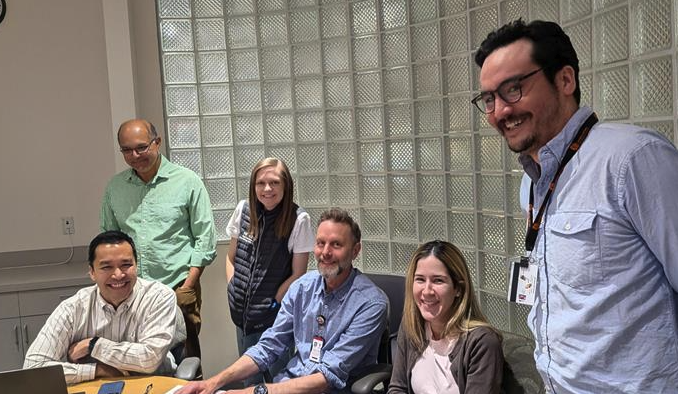
Building AI Skills for the Future of Patient Care
Categories: Education, Research, OperationsAs AI becomes increasingly integrated into healthcare, clinicians need more than technical skills. A recent DBMI workshop gave participants hands-on experience developing AI-powered healthcare solutions while learning how to responsibly evaluate, implement, and apply these emerging technologies in clinical practice.
-

Mapping AI Exposure Across America's Workforce
Categories: Education, Research, OperationsUniversity of Utah student Teddy Wright is helping map AI's impact on the workforce through research that connects real-world AI capabilities to thousands of occupational tasks, informing policy, education, and workforce planning.
-

From Clinical Research Pioneer to AI Explorer
Categories: Education, Research, OperationsProfessor Emeritus J. Michael Dean spent decades advancing pediatric clinical research through the University of Utah's Data Coordinating Center. Now in retirement, he's exploring how AI can help accelerate clinical research, streamline workflows, and support lifelong learning through hands-on experimentation and innovation.
-

AI and the Future of Design Education
Categories: Education, Research, OperationsTo kick off the fall semester, the College of Architecture and Planning convened faculty, staff, and researchers for a forward-looking conversation on AI and the future of design education. The discussion examined emerging opportunities for teaching and research, the importance of responsible AI, and how diverse disciplinary perspectives can help shape the future of these technologies.
-

AI at the U Forum: July 22, 2026
Categories: Education, Research, OperationsAt the July AI at the U Forum, participants explored new AI programs, upcoming events, AI resources, the university's new Bachelor of Science in Artificial Intelligence degree, and emerging opportunities powered by Redtail, Utah's AI supercomputer. The forum highlighted the growing AI ecosystem at the University of Utah and ways for faculty, staff, students, and community members to get involved.
-

The Crimson AI Challenge
Categories: Education, Research, OperationsThis fall, the AI Leadership Team launches the Crimson AI Challenge, inviting the university community to share impactful AI use cases across research, teaching and learning, and administrative operations. Selected participants will be recognized.
-
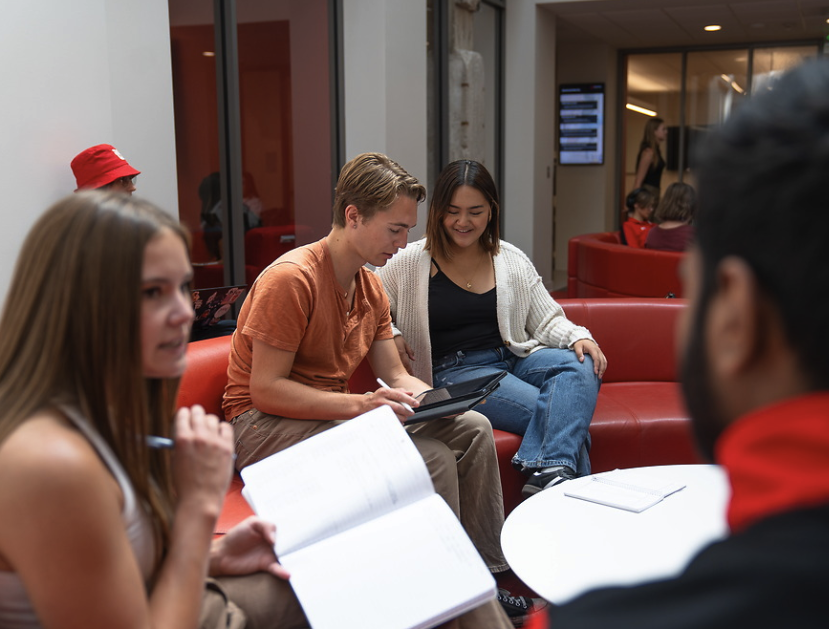
Celebrating the Build with AI Codex Hackathon Winners
Categories: Education, Research, OperationsThe Build with AI Codex Hackathon brought together an impressive group of innovators who showcased creative, impactful applications of AI across research, healthcare, security, accessibility, and productivity. We were inspired by the technical depth and real-world potential demonstrated in each project, and we're proud to recognize our winners and all participants for their outstanding work.
-
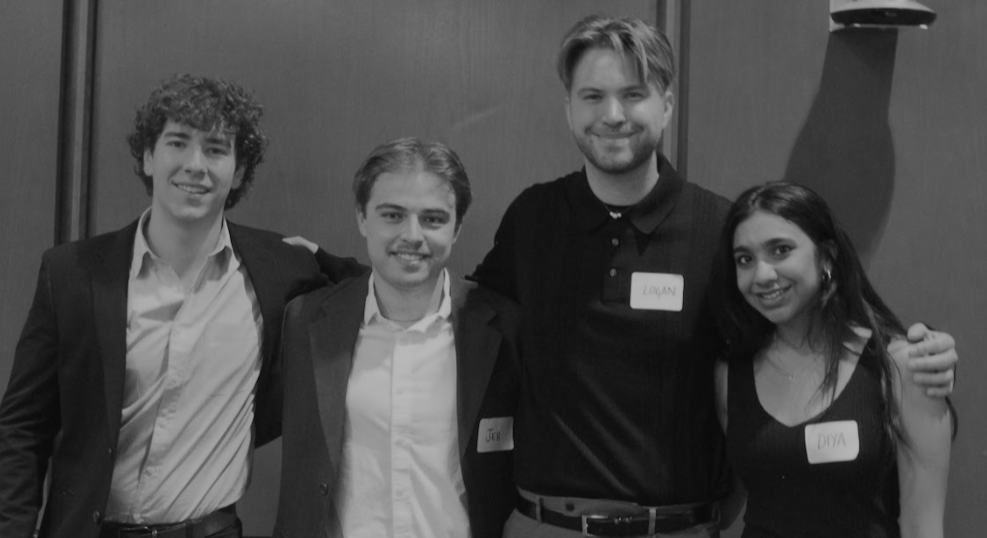
National Recognition for a University of Utah AI Initiative Built on Trust, Conversation, and Student Voice
Categories: Education, Research, OperationsA student-led conversation about artificial intelligence at the University of Utah is receiving national attention. Featured in the 2026 EDUCAUSE Horizon Report, the Student-Led AI Symposium demonstrates how trust, collaboration, and student voice can strengthen AI literacy and engagement across campus. Discover how this growing initiative is helping build a more connected and informed AI community.
-
AI at the U Forum: Building Momentum Across Campus
Categories: Education, Research, OperationsThe June 3 AI at the U Forum highlighted practical, approved tools and hands‑on learning opportunities to evolving guidance on responsible use in teaching, research, and operations. Featuring community events, new tools, and ways to get involved.
-
Fall 2026 AI Foundations Series Launches This August
Categories: Operations, Research, EducationDigital Learning Technologies is excited to introduce the Fall 2026 AI Foundations Series, a semester-long professional learning opportunity designed for students, staff, and faculty who want to build practical skills with today's most impactful AI tools.
-

University of Utah Expands AI Toolkit with Google Gemini and NotebookLM
Categories: Education, Research, OperationsThe University of Utah continues to expand its AI ecosystem with the introduction of Google Gemini and NotebookLM. Designed to support productivity, research, and learning, these tools reflect the university’s commitment to providing innovative capabilities within a secure and responsible framework.
-
AI at the U Forum: Building Momentum Across Campus
Categories: Education, Research, OperationsThe April 8 AI at the U Forum highlighted how artificial intelligence is gaining momentum across campus—from practical, approved tools and hands‑on learning opportunities to evolving guidance on responsible use in teaching, research, and operations. Featuring updates from university leadership and the growing AI community, the forum underscored a shared commitment to making AI more accessible, intentional, and integrated into everyday work and learning.
-

Driving Innovation in Environmental and Spatial Data Science
Categories: Education, ResearchThe School of Environment, Society & Sustainability (ESS) is expanding its leadership in AI-driven environmental and spatial data science through new faculty hires, academic programs, and research investments. With expertise spanning remote sensing, machine learning, and geospatial analytics, ESS supports cutting-edge research on climate impacts, natural hazards, and sustainability challenges. New undergraduate and master’s programs in Spatial Data Science are preparing students with in-demand AI and geospatial skills, reinforcing ESS’s long-term vision for innovation in research and education.
-
Turn Ideas into Impact: Join the Build with AI Hackathon
Categories: Education, Research, OperationsJoin our upcoming AI Hackathon, a fast‑paced virtual event where participants from any discipline use AI tools to tackle real‑world problems. In just a few hours, you’ll collaborate, build, and explore how AI can drive practical impact.
-

Structuring the Unstructured: Advancing Health Data with AI
Categories: ResearchFatemeh Shah Mohammadi’s teams are using large language models to turn messy, unstructured health text into transparent, structured data that clinicians and researchers can trust. Their work enables earlier clinical risk detection and scalable, standardized metadata extraction, improving interoperability, reproducibility, and real‑world health insights.
-

AI Innovation in Mental Health Care
Categories: Operations, ResearchDr. Warren Pettine is advancing human-centered AI in mental health care. His work demonstrates how AI can strengthen clinical decision‑making, improve workflows, and support more effective and equitable mental health care.
-

GARDE-Chat: AI-Powered Platform for Digital Health Interventions
Categories: ResearchGARDE-Chat is an AI-powered, no-code platform that enables researchers to build chatbot-based digital health interventions at scale. Developed by Professors Guilherme Del Fiol and Ken Kawamoto, the tool supports rule-based and LLM-driven chatbots and has already powered more than 15 projects—including large trials reaching up to 100,000 patients. By improving access to evidence-based services and helping secure over $35 million in federal funding, GARDE-Chat demonstrates how AI can make healthcare interventions more scalable, effective, and widely accessible.
-

AI and Bionics: Restoring Movement and Sensation
Categories: ResearchAt the University of Utah’s Utah NeuroRobotics Lab, artificial intelligence is driving breakthrough research in bionic technology. Led by Jacob A. George, the team develops AI-powered prosthetic and assistive devices that restore movement and sensation for individuals with neuromuscular impairments. Their work blends engineering, medicine, and machine learning to create intuitive, life-changing technologies—many of which have already produced compelling patient outcomes and inspired new startup ventures. Through deep interdisciplinary collaboration, the lab is shaping the future of bionics and redefining what’s possible in assistive healthcare.
-

AI and Computer Vision: Transforming Cancer Care Through Collaborative Research
Categories: ResearchA multidisciplinary team at the University of Utah is using artificial intelligence and computer vision to develop advanced imaging biomarkers that enhance cancer diagnosis, prognosis, and treatment planning. Led by Beatrice Knudsen, one key research direction focuses on creating computational tissue biomarkers, while the broader team integrates histopathology, radiology, and clinical data into multi-modal algorithms. Supported by major federal grants and cross-department collaboration, this work is advancing precision cancer care and generating impactful publications and training opportunities.
-

AI Accelerates Public Health Research and Response
Categories: ResearchUniversity of Utah Department of Internal Medicine Research Associate Professor George G. Vega Yon and his software development team use agentic AI as a human-guided co-developer to accelerate CDC-funded public health projects. AI assists with coding, testing, and rapid prototyping while researchers remain fully in the loop, enabling faster responses to real-world needs such as measles outbreak modeling.
-

Understanding the National Data Platform: A New Era in Collaborative Science
Categories: ResearchJess Tate of the SCI Institute shares about the National Data Platform (NDP), an NSF-funded collaboration designed to transform how researchers access, share, and analyze data. By connecting data sources, tools, and compute resources in a federated ecosystem, NDP makes data more findable, accessible, interoperable, and reproducible (FAIR)—advancing collaborative, scalable, and trustworthy science.


